Progress
-
March 6, 2026
Promoting the hiring and retention of people with disabilities (PWD) - The case of Harmonie Mutuelle

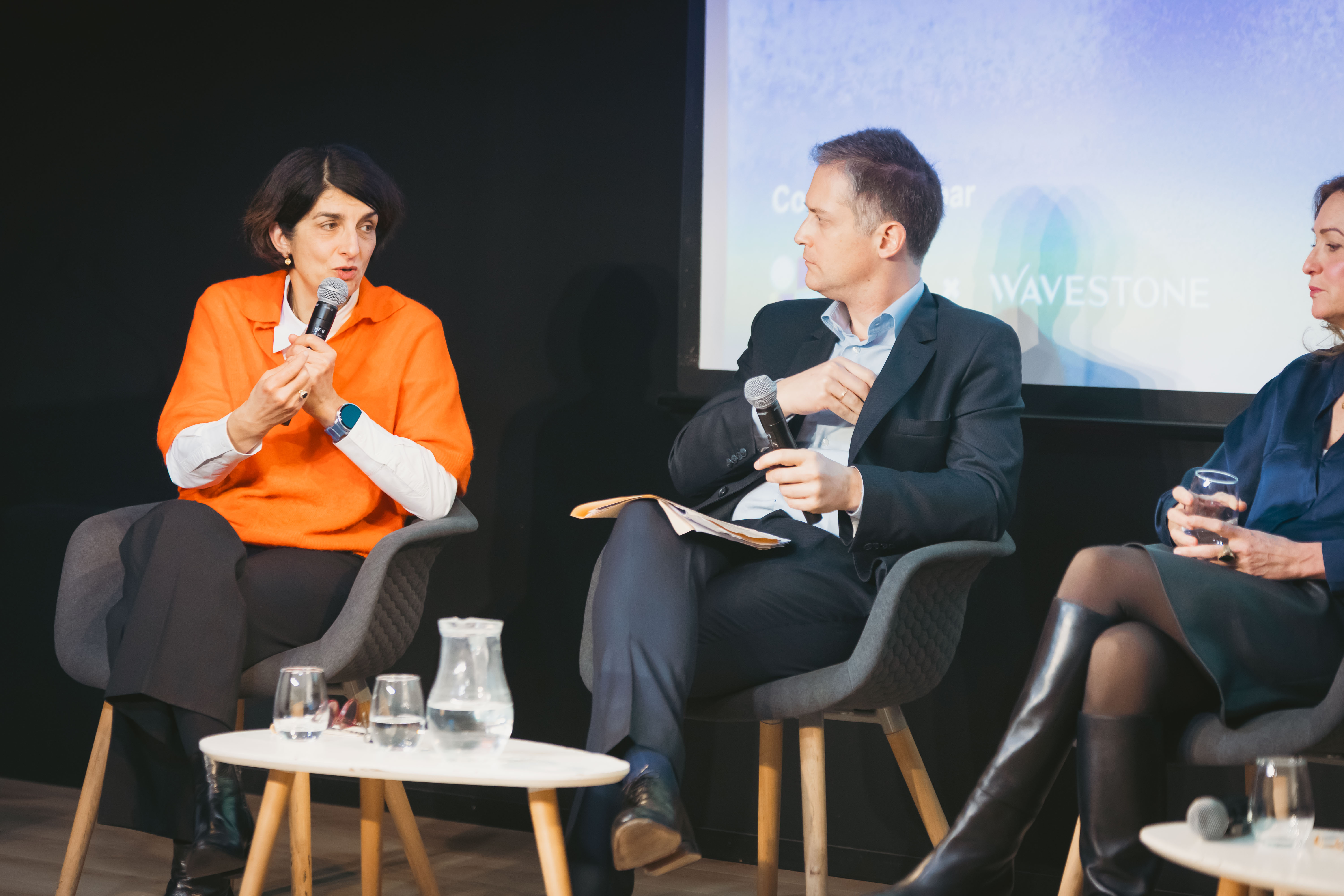
On January 29, 2026, Impact France and Wavestone published the national study "Economically valuing corporate engagement."
Objective: to translate the economic impact of companies' social and environmental actions into costs avoided for society.
Among the seven case studies analyzed, Harmonie Mutuelle's focuses on a key social issue: hiring and retaining people with disabilities.
Harmonie Mutuelle is a mutual insurance company with a mission, committed to disability issues since 2013 through a series of different disability agreements and by signing the Manifesto for the Inclusion of People with Disabilities.
This policy is based on two complementary levers:
In 2024:
These figures reflect an operational commitment. The study focuses on assessing the impact on the community. As Catherine Touvrey, CEO of Harmonie Mutuelle, points out: " We firmly believe that diversity is a driver of performance in business and that hiring and retaining people with disabilities benefits both the individuals recruited and the community as a whole. "
To measure the effects of this policy, the study is based on a simple principle: comparing the observed situation with a reference situation in order to estimate the public and social costs avoided thanks to the company's actions.
In the case of Harmonie Mutuelle, the scenario is clear: what would happen if these people were not employed?
Since the reference situation is non-employment (unemployment or inactivity), the difference between these two situations makes it possible to estimate the costs avoided by the public authorities. The amounts given are estimates, based on transparent and conservative assumptions, which are detailed in the full report.
Taking into account both employees with disabilities employed by Harmonie Mutuelle and jobs supported through the use of the protected and adapted work sector (STPA), the study estimates that €12.4 million in costs will be avoided for the public authorities in 2024.
This amount reflects a simple reality: when people are employed rather than unemployed, the community spends less and collects more. Specifically, these €12.4 million cover:
This is therefore not a theoretical valuation, but a direct budgetary effect on public finances.
From the perspective of people with disabilities themselves, the transition from inactivity to employment represents an estimated income differential of around €4 million in 2024. This amount is not included in the €12.4 million, as it falls under a different level of analysis. In other words:
The study does not stop at the case of Harmonie Mutuelle. It questions what collective mobilization would achieve. In France, companies with more than 20 employees are subject tothe Obligation to Employ Disabled Workers (OETH), which sets a target rate of 6%.
If this rate were actually achieved by all the companies concerned, approximately 128,000 additional people would be in employment.
The estimated impact is significant: €2.5 billion in costs avoided in 2024. To give an idea of the scale, this represents around one-tenth of the Social Security deficit in 2025.
This highlights a lever already enshrined in existing law: fully enforcing a regulatory obligation would have a major budgetary impact, while strengthening professional inclusion.
The Harmonie Mutuelle case shows that a structured inclusion policy can be objectified, quantified, and put into perspective.
As Catherine Touvrey, CEO of Harmonie Mutuelle, points out:
" We were very enthusiastic about contributing to this study, which quantifies the benefits of our actions: €4 million in costs avoided for direct beneficiaries, and €12 million for society as a whole. What's more, if 100% of French companies fulfilled their obligation to employ people with disabilities, the cost avoided would be €2.4 billion, or one-tenth of the social security deficit in 2025. This is a real incentive for everyone to get involved."
But the message is clear: when structured and embraced, an inclusion policy can be seen not only as a social lever, but also as a measurable factor in the public interest.

La Commission européenne a publié mi-septembre une étude inédite consacrée aux “Impact-driven businesses” pour évaluer la contribution de ces modèles aux priorités européennes, identifier les freins à leur développement et ouvrir la voie à de nouvelles politiques publiques spécifiques. Dans cet article, nous partageons notre analyse des enseignements de ce nouveau rapport européen et décryptons les choix opérés et les perspectives qu’il dessine pour le développement des modèles à impact.